pedro
a. ramírez
*makes projects,
commissions,
releases,
graphics,
text and
code.
*about
*calendar
*links:
︎ bandcamp
︎ nina
the rocks are quiet because the trees are listening (2025)
(update in process) ~~~ (update in process) ~~~ (update in process) ~~~

The Rocks Are Quiet Because The Trees Are Listening is a multichannel sound installation, sound performances, and a 22,000-word booklet. The project is rooted in supernatural horror as a philosophical framework: the idea, explored by thinkers such as Eugene Thacker and Kant, Ligotti and H.P. Lovecraft, that there are things operating around us that we cannot perceive or comprehend, and that the confrontation with this limit is itself a source of horror. Terrifying not only because they are outside of our understanding, but because they are ontologically indifferent to us as humans.
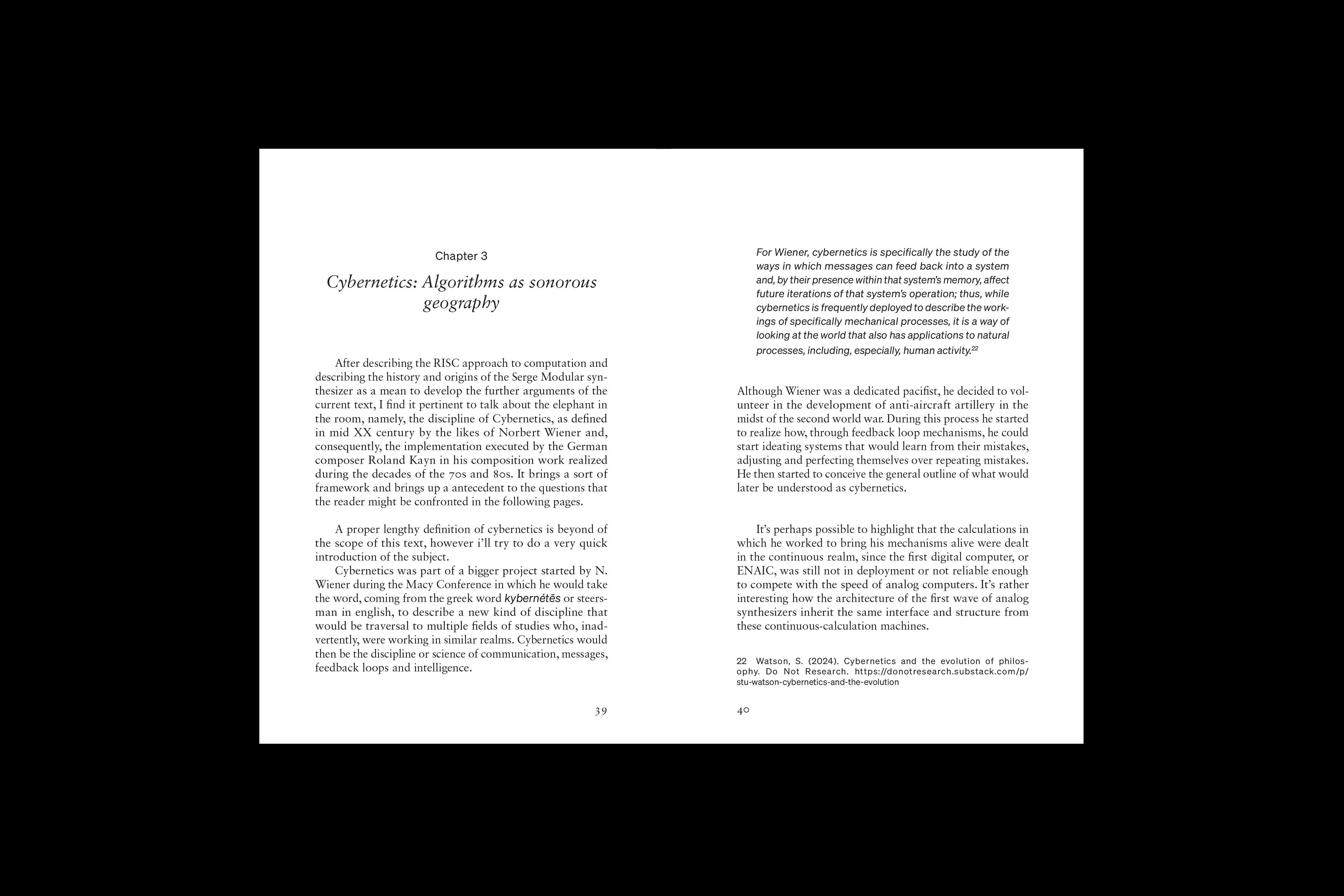
The installation attempts to construct such a situation through sound. Three loudspeakers produce crackles, pops, and distortions generated through analog synthesizer feedback, processes inspired by cybernetics in which signals monitor and regulate themselves in closed loops. A directional speaker, mounted on a servo motor that rotates sporadically, projects a silky synthetic voice reading accelerationist poetry on a whisper tone.
The system continuously records its own output and replays it in overlapping cycles, so the space gradually accumulates layers of its own sonic history. This circulating material is also processed through a variational autoencoder (RAVE), a model trained on the same analog synthesizer recordings that inform the rest of the piece. The model compresses and regenerates what it receives, returning transformed versions of sounds that already carry traces of the original practice, with the digital artefacts of sonic neural network.
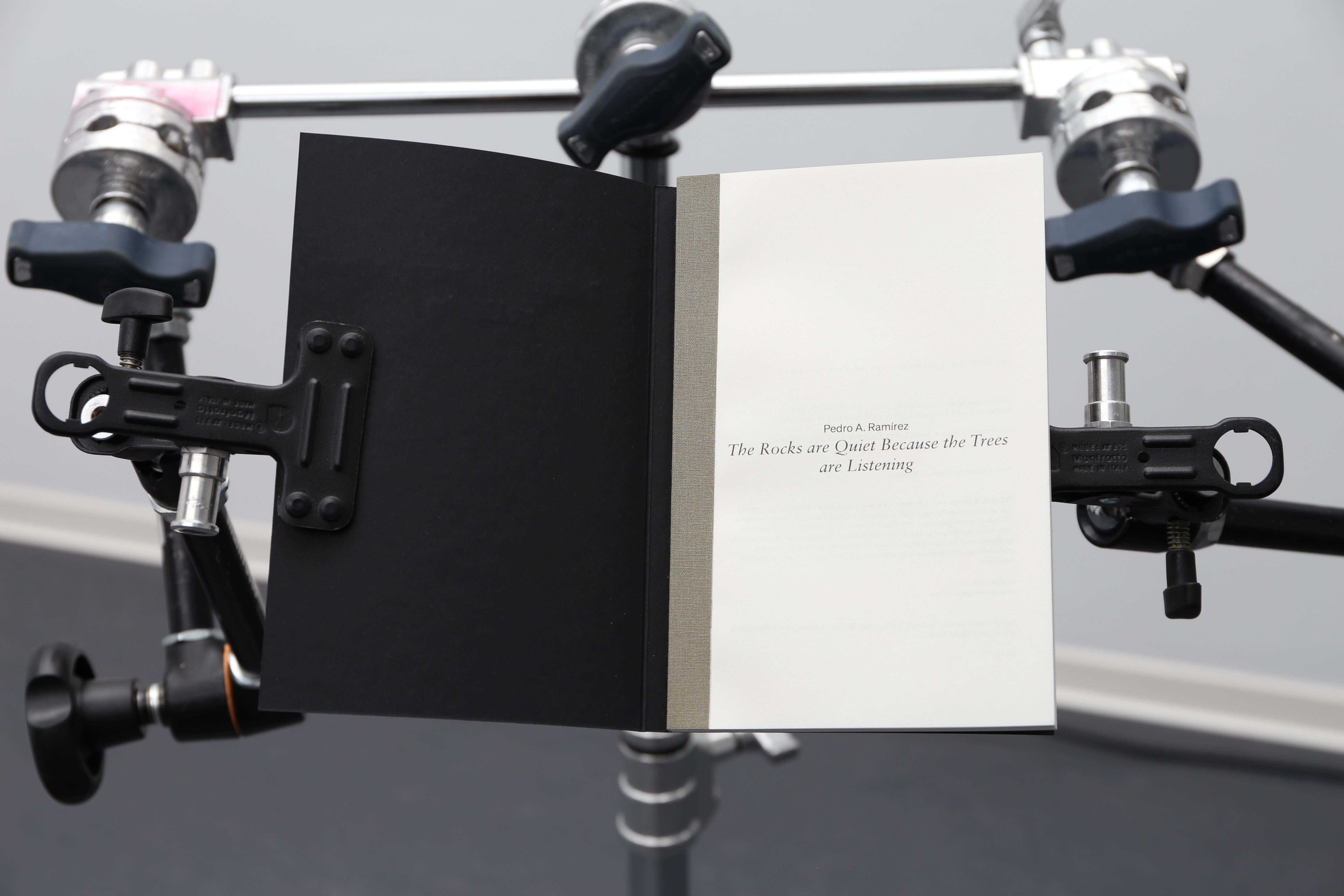
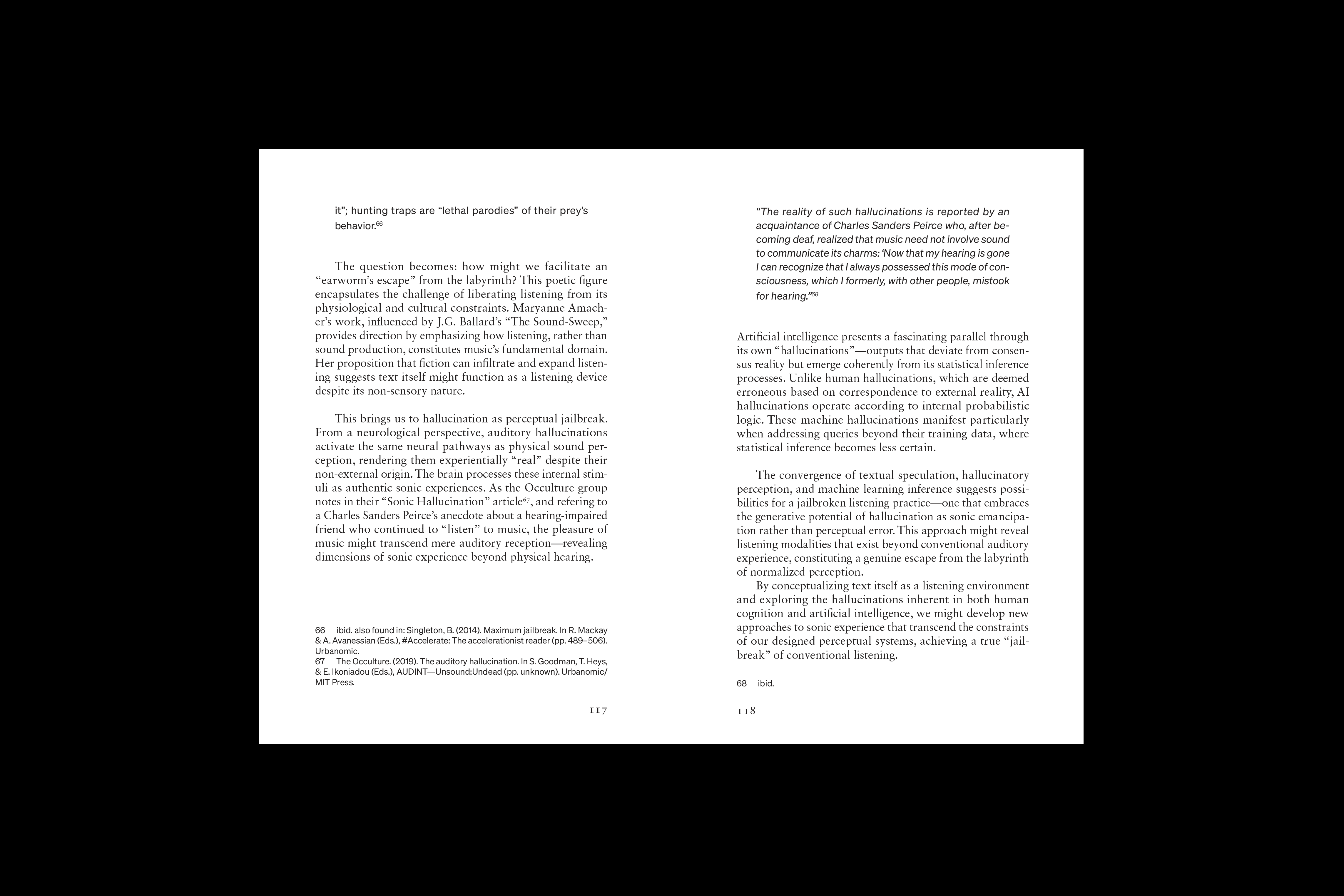
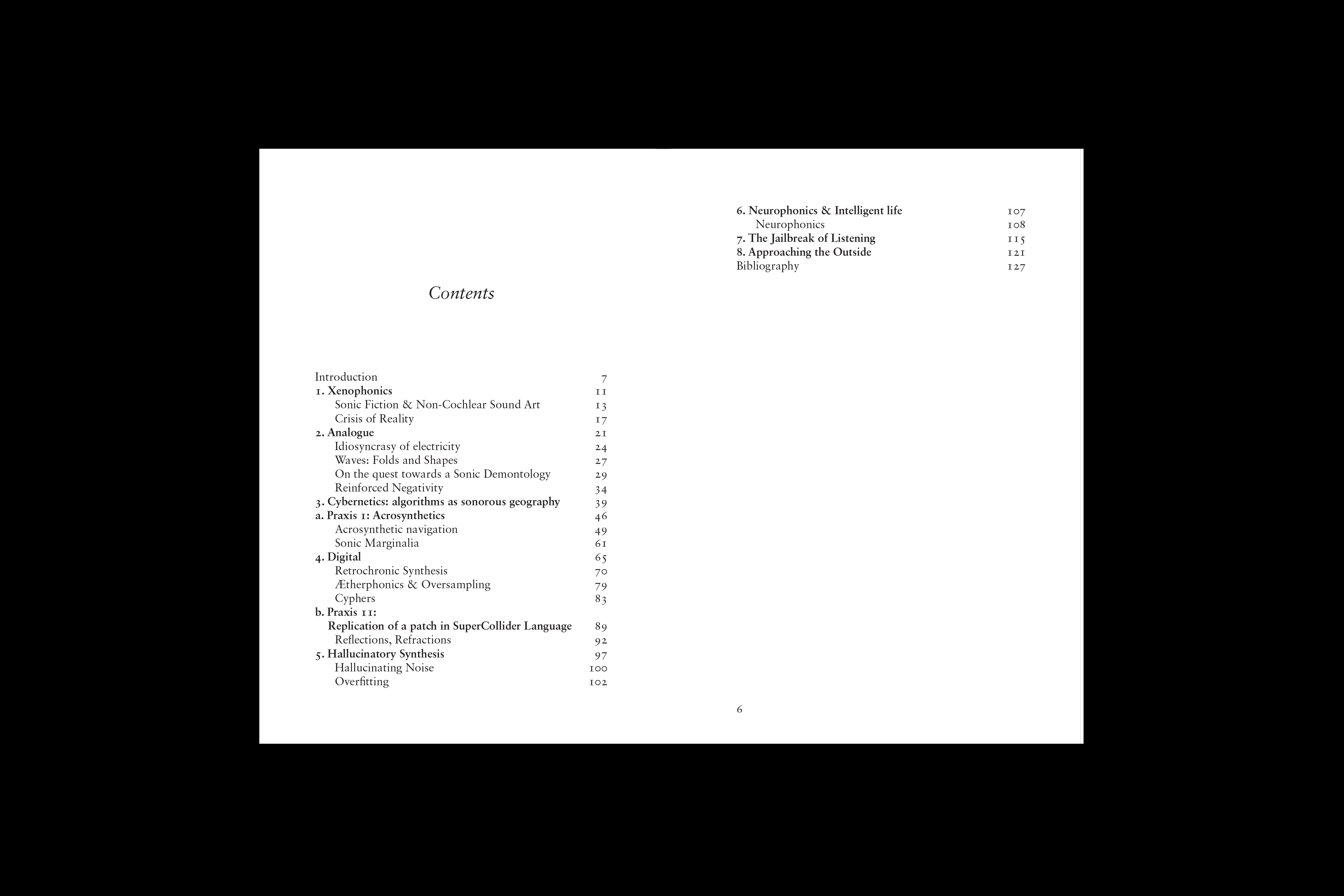
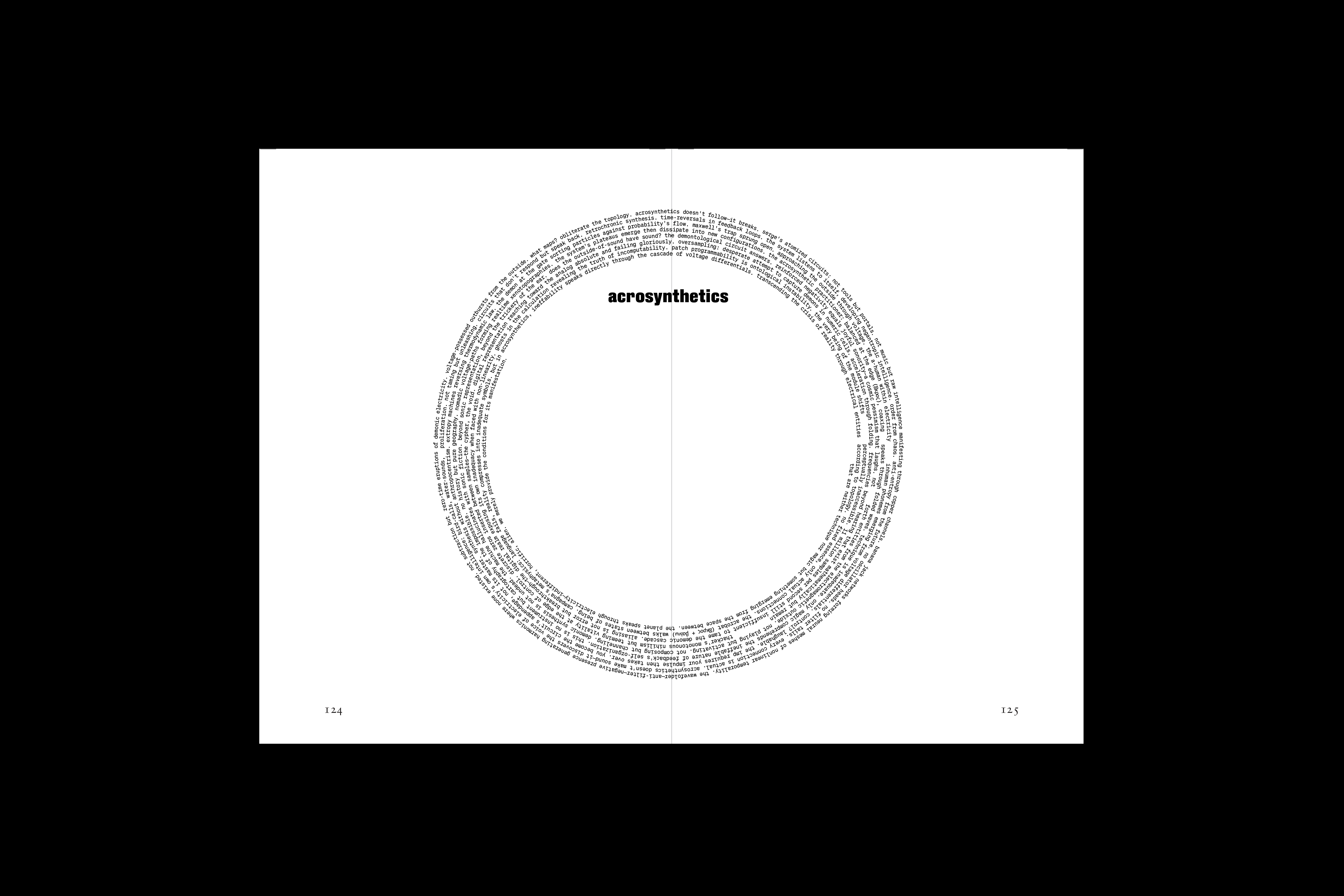
The booklet is written as a piece of theory fiction. It traces a path from the philosophical foundations of non-cochlear sound through the analog and digital domains, cybernetics, and neural synthesis, arriving at what the text calls "approaching the outside.”, a speculative approximation of the outside of the listening experience.
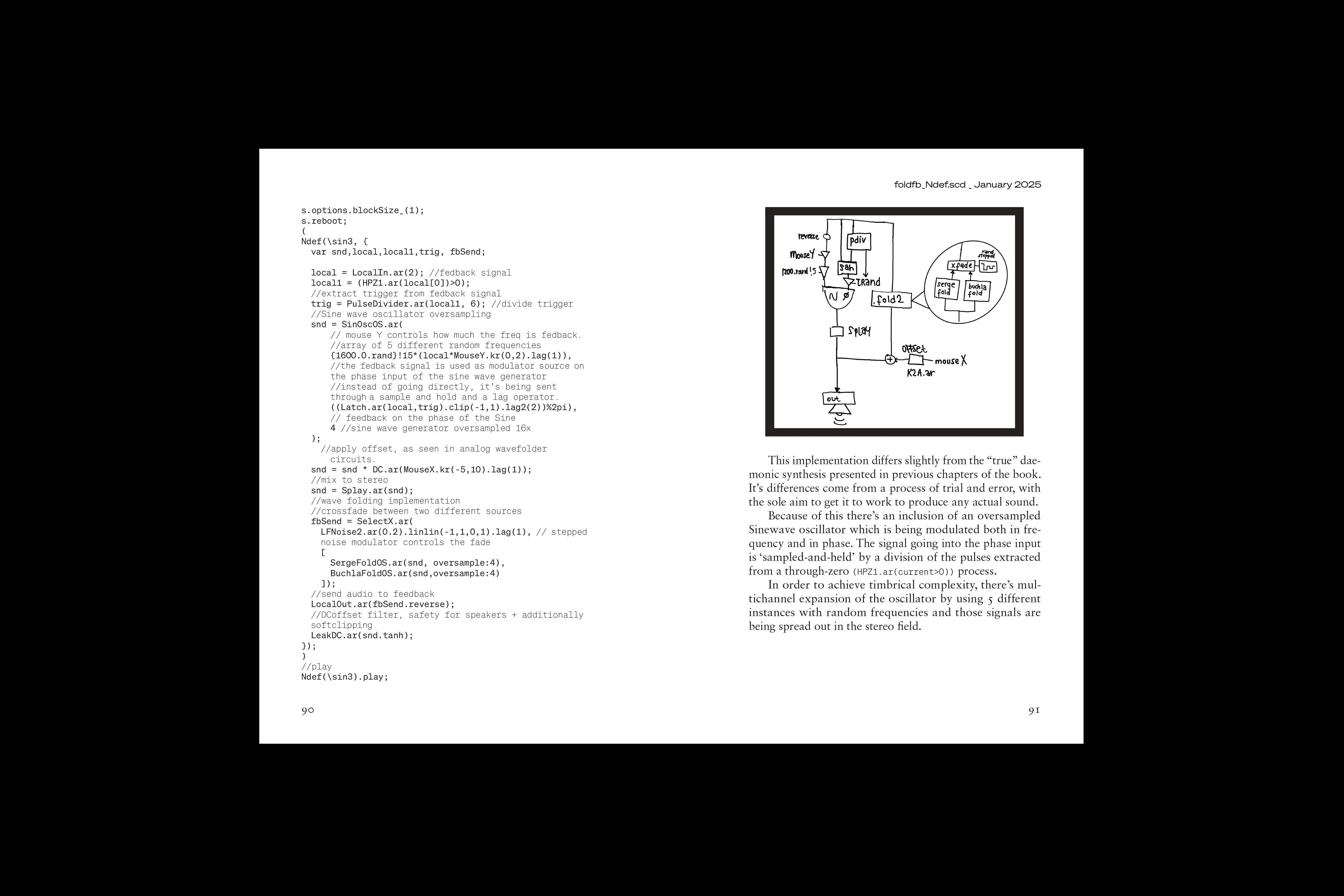
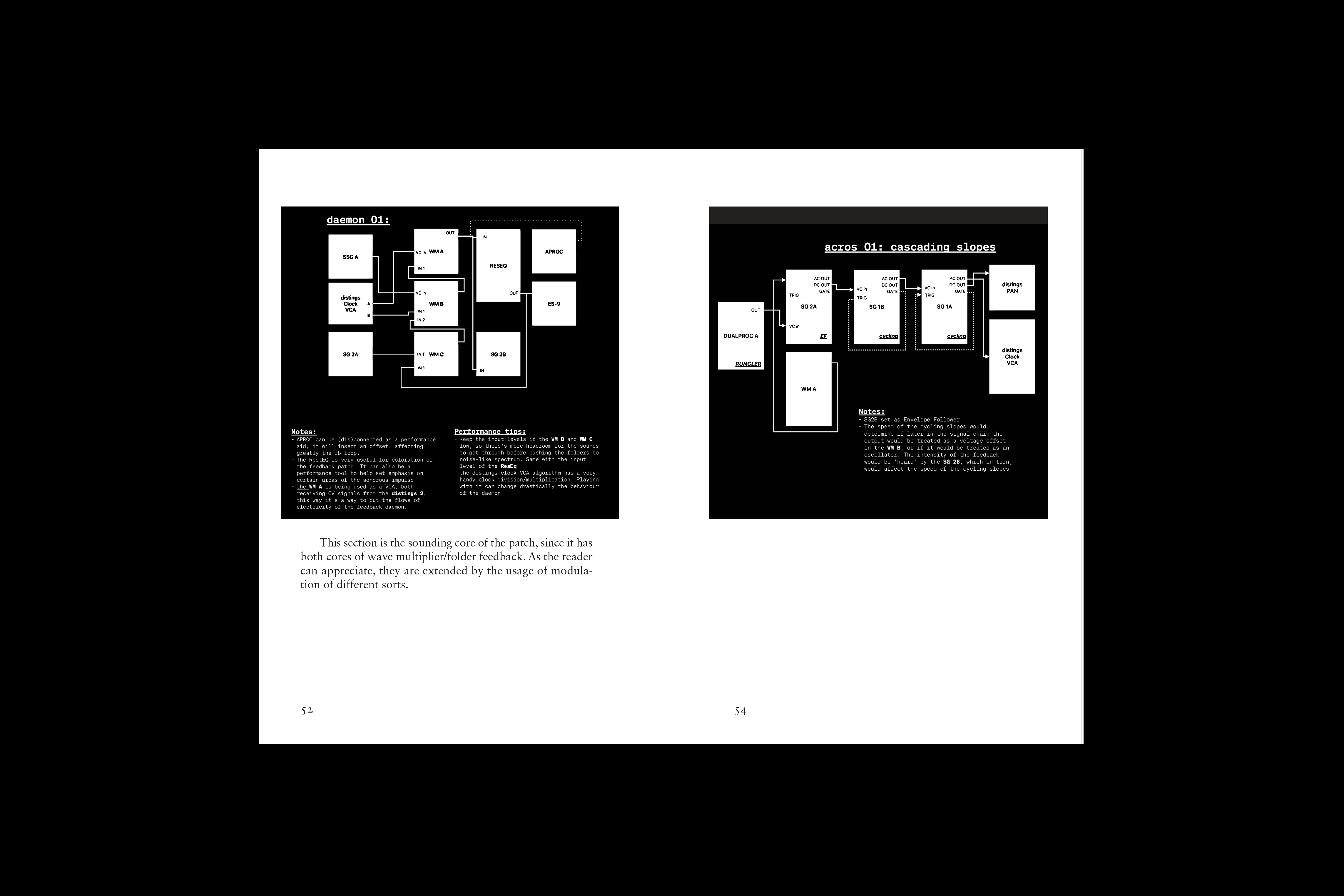
Theory and praxis alternate throughout, with technical schematics and patching diagrams sitting alongside speculative writing. It comes from a conviction that theory is itself a practice and a performance in contemporary art, and that engaging with it is as important as engaging with the materiality of sound.


Complementary graphic elements, CD cases, and a fictional narrative extend this further, building a world around the installation.
The piece holds a deliberate paradox. Its drive is toward a sonic realm operating on its own logic, indifferent to human audition. Yet the system learned from a specific body and set of decisions, exposing how a complete exteriority remains inaccessible. Jailbreaking the labyrinth of the inner ear. The work inhabits this.
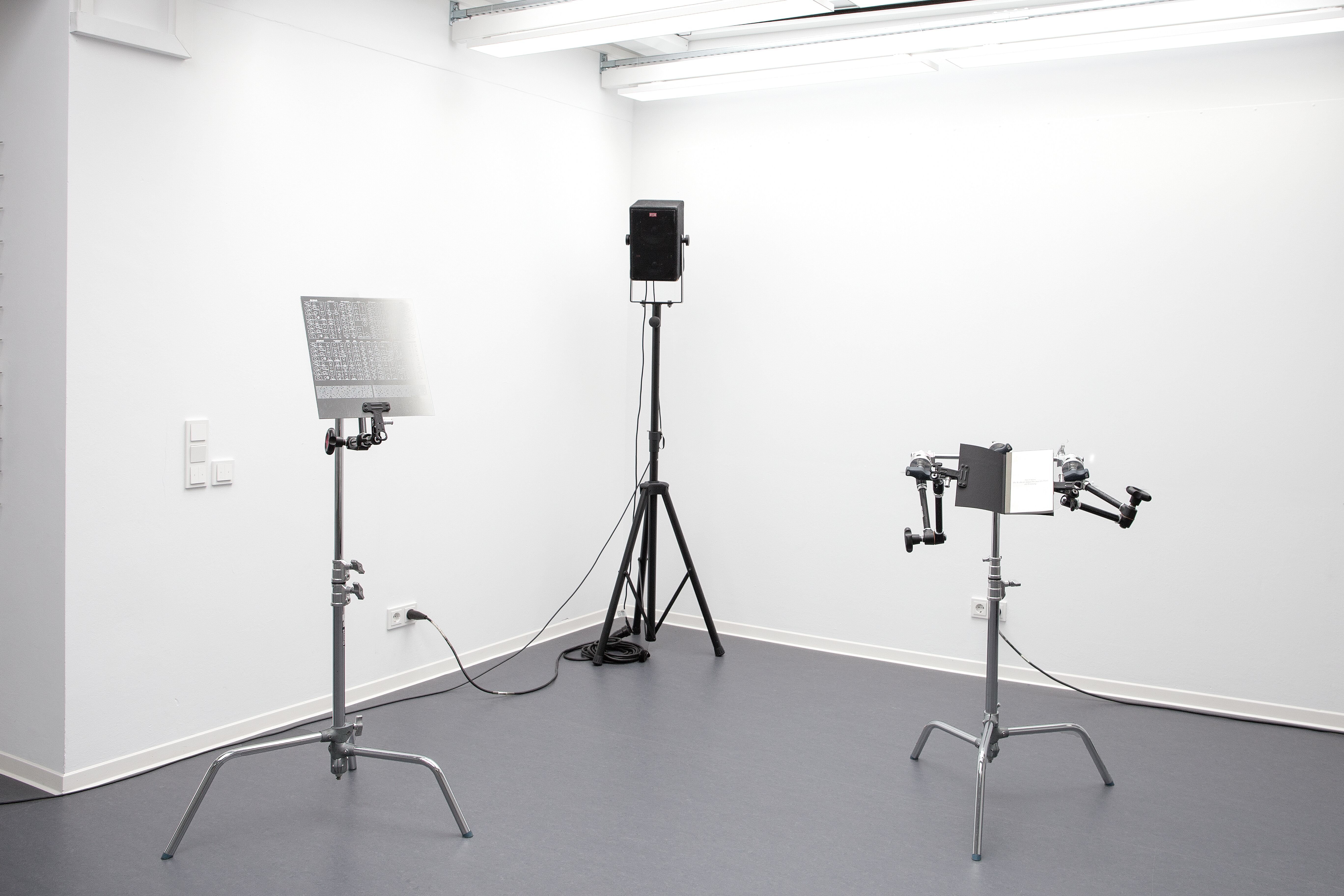
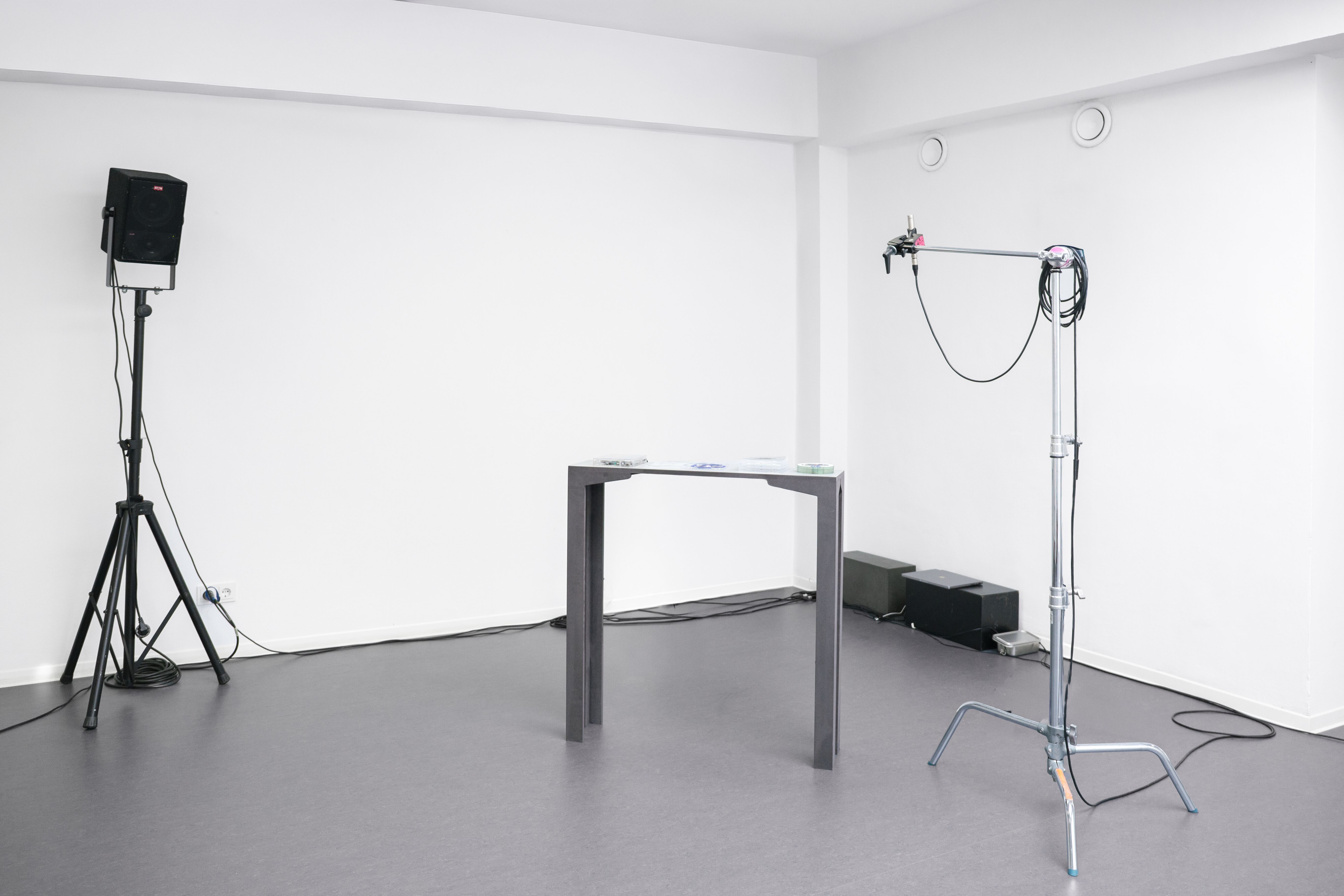
Coded in the computer music environment Supercollider, the installation is comprised by different cycles on which the following actions are performed based on weighted random chances:
-
Sub-woofer plays back a boom
-
Moving the Servo Motor, which is Connected to the directional speaker
-
Recording of the ambience of the room (Buffer(n))
-
Playback of the ambience of the room (Buffer(n-1))
-
Playback of speech sample through directional speaker
-
Playback of samples from a pool of improvisations on the "acrosynthetic" patch, streamed from CD playback via bluetooth. (in different versions, another audio would be played here1).
More importantly: Every playedback sound has a chance of being either:
- being processed through a frequency Shifter (to shift peaking resonances in the feedback process
- being processed through the RAVE model and played back in the space. This opens the possibility of turning the room into a transfer function itself, by recursively throwing sounds over the variational autoencoder system.
Buffer System:
Since the sound installation should remain independent from maintenance from a technically savvy person, I decided to create a cascade of audio buffers from which the reading and writing functions would be implemented in a round robin fashion. This is meant to prevent positive feedback from occurring from a single circular buffer approach.
in the first round, It would record the first buffer. On the second, play back the first while recording the second and on the third, reproduce the second while playing the third, and so on. Each round would have an accumulation of room sounds and feedback signal, but still hold some room for the sounds "to breathe".
1:
This comes from one of my attempts to "colour" such systems with meaning. A way to present a difference between the clean systemic approach of sound installations as seen in the work of Alvin Lucier or others, where the composition would be the sonority of an autonomous running system, i.e I’m sitting in a room.
By inserting a foraneous element into the system, I aim to give the piece a different structure that somehow starts finding resonances with Bateson’s relationship of the Metaphor and the mind in Cybernetics.



All photographs by Yonca Yıldırım unless stated otherwise.